Welcome to The Pavilion’s glossary. If you’ve been diving into our player statistics analysis and come across the acronym FDPI or other fielding jargon, this guide is for you. Understanding these terms is key to appreciating the finer details of the game, especially when analysing the impact of players in the England national cricket team or during intense Ashes series battles. Let's break down the essential fielding and dismissal terminology.
Fielding Dismissals Per Innings (FDPI)
A statistical metric that measures a fielder's average contribution to dismissals per innings. It is calculated by dividing the total number of catches, run-outs, and stumpings a player is involved in by the number of innings they have fielded. A higher FDPI indicates a consistently active and influential fielder, crucial in tight Test matches.
Catch
The act of a fielder cleanly receiving a ball struck by a batter before it touches the ground, resulting in the batter's dismissal. Catches are the most common form of dismissal and can be taken by any fielder, though specialists in the slip cordon or close-in positions, like Joe Root, often have high catch rates.
Run Out
A dismissal where a fielder breaks the wicket with the ball while the batter is out of their crease during a run. This requires sharp reflexes, accurate throwing, and excellent teamwork, often involving the wicketkeeper like Jonny Bairstow or a agile fielder in the ring.
Stumping
A dismissal exclusive to the wicketkeeper (or occasionally a fielder), where the batter is out of their crease not attempting a run and the wicket is put down with the ball. It requires quick hands and game awareness, often off the bowling of a spinner.
Direct Hit
A throw from a fielder that hits the stumps without being intercepted by another player, effecting a run out. This demonstrates exceptional fielding skill and accuracy under pressure, a hallmark of alert fielding units.
Slip Cordon
A group of fielders positioned behind the batter on the off side, designed to catch edges from the bat. Positions include first, second, third, and sometimes fourth slip. England often employs a strong cordon, especially with the swing of James Anderson.
Gully
A fielding position on the off side, squarer than the slips but finer than point. The gully fielder is crucial for catching slashed cuts and thick edges, a key position in seaming conditions at venues like Lord's.
Point
A fielding position square of the wicket on the off side. The point fielder stops cuts and drives and is vital for preventing quick singles, requiring a strong and accurate throw.
Cover
A fielding position on the off side, in front of square. Cover fielders are often busy stopping well-struck drives and need to be excellent athletes to cut off boundaries, a focus in England's aggressive Test cricket approach.
Mid-wicket
A fielding position on the leg side, square of the wicket. Fielders here look to stop pulls and clips off the pads and are involved in run-out opportunities from quick singles.
Fine Leg
A fielding position behind the batter on the leg side, close to the boundary. This fielder deals with deflections off the bat, like glances, and must prevent boundaries from errant bowling.
Backward Point
A fielding position slightly behind square on the off side, between point and gully. It’s a specialist catching position for balls that fly off a batter's edge at a lower trajectory.
Short Leg
A close-in fielding position on the leg side, very near the batter. It’s a specialist and often courageous position for catching balls popping off the bat or pad, frequently used against spinners or short-pitched bowling.
Silly Point
An even closer-in version of point, positioned dangerously close to the batter. The fielder here is looking for bat-pad catches and requires immense concentration and bravery.
Diving Catch
A catch taken where a fielder launches themselves horizontally to intercept the ball. This spectacular play often turns matches and is a highlight of modern athletic fielding standards.
Boundary Save
The act of preventing the ball from reaching or crossing the boundary rope, thus saving runs. This often involves a sliding stop or a well-timed dive, contributing significantly to a team's defensive pressure.
Overthrow
Extra runs scored after a fielder's throw hits the stumps and deflects away, allowing the batters to run further. Overthrows are costly errors that can shift momentum in a game.
Wicketkeeper Glovework
The specific skills of the wicketkeeper, including catching, stumping, and gathering throws. The quality of glovework, as seen with Jonny Bairstow, can define a team's fielding effort and create crucial dismissals.
Reaction Time
The speed at which a fielder responds to a struck ball. Superior reaction time, often seen in close catchers like Ollie Pope, allows for more caught and bowled chances or sharp catches in the slips.
Fielding Circle
In limited-overs cricket, a mandatory ring of fielders during certain powerplay phases. In Test cricket, the term can refer to the ring of catchers or saving fielders set by a captain like Ben Stokes.
Pressure Building
A strategic fielding concept where tight bowling and alert fielding, including dot balls and sharp stops, build pressure on batters, leading to rash shots and dismissals. This is a core tenet of good Test match tactics.
Chasing the Ball
The effort and speed a fielder shows in pursuing a ball hit into the outfield. Effective chasing limits the number of runs scored and can create run-out opportunities from ambitious second runs.
Relay Throw
A coordinated fielding play where one fielder retrieves the ball and throws it to a teammate closer to the stumps, who then throws at the wicket. This is used for covering long distances quickly to effect run outs.
Clean Collection
The smooth gathering of the ball by a fielder, either from the ground or from the air, without fumbling. A clean collection is the foundation for an accurate throw or a quick release.
Deflection Dismissal
A dismissal where the ball hits the batter's body, usually the pad, and is then caught by a fielder before it hits the ground. This is distinct from a straightforward catch and often involves close-in fielders.
Keeper up to the Stumps
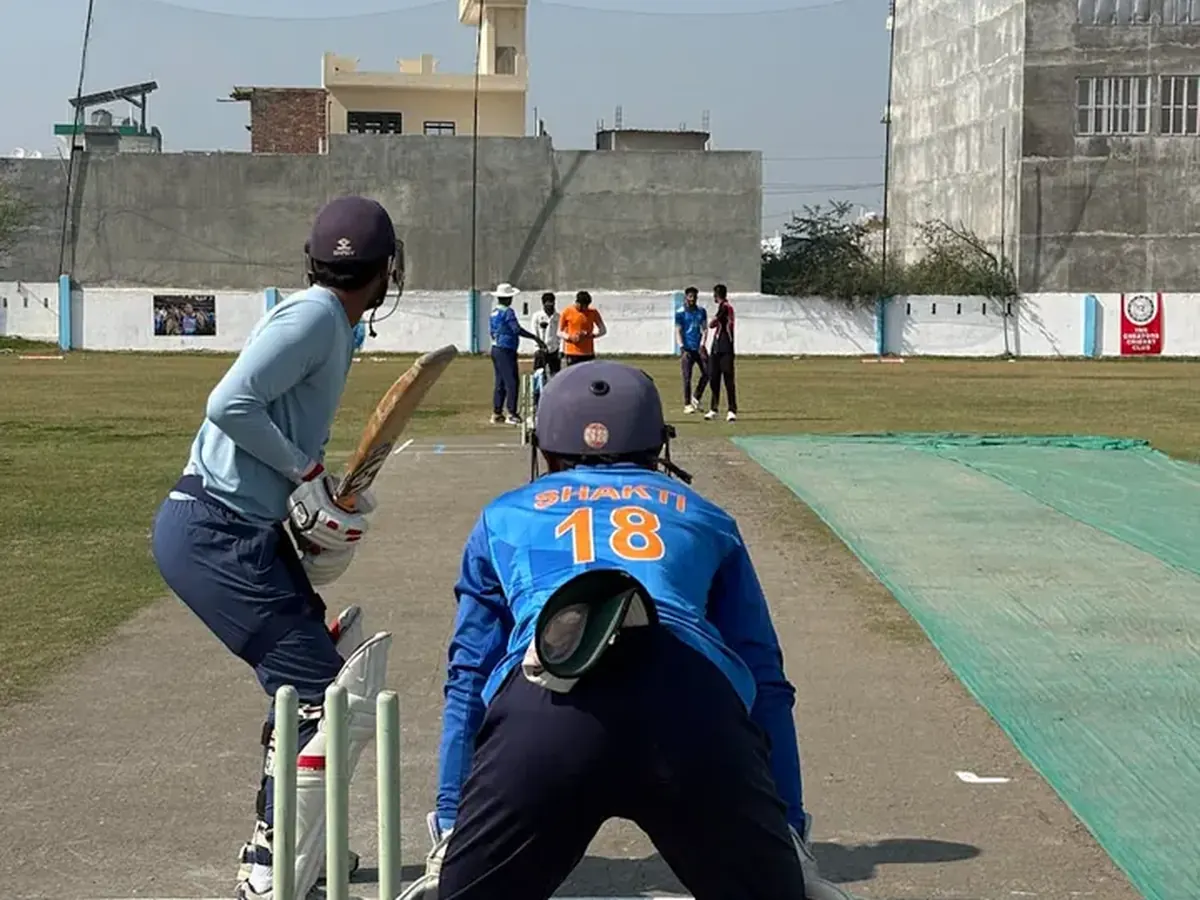
When the wicketkeeper stands very close to the stumps, usually to a spin bowler or a very slow seamer. This position increases the chances of a stumping and puts pressure on the batter's footwork.


Reader Comments (0)